Every FunXplore enclosure uses 0.47-inch fir wood panels, asphalt shingle or UV-resistant roofing, and elevated floors โ construction decisions made at design time, not added as afterthoughts.
The 0.43-inch wire floor spacing on rabbit hutches prevents sore hocks, aluminum-framed ramp edges resist chewing, and dual escape doors on cat shelters let feral cats bolt from a second direction when a predator approaches.
FunXplore's walk-in catios have accumulated up to 240 verified Amazon ratings, the cat shelter line appears in Business Insider and cats.com roundups, and the sandbox line carries CPSIA and ASTM F963-23 safety certifications.
FunXplore hutches are sleeping shelters and supervised outdoor enclosures โ not full-time rabbit housing โ and the product descriptions say so; the iron chew-proof frames on dog kennels resist gnawing but no wood structure is indestructible, and the content here reflects that.
FunXplore's cat shelters, catios, dog kennels, rabbit hutches, chicken and duck coops, and kids' sandboxes are built on the same fir-wood foundation โ asphalt roofing, elevated floors, weather-resistant finishes โ so a family managing cats, a dog, backyard chickens, and kids can source everything from one brand without switching build quality mid-yard.
Eight insulated and weatherproof wooden shelters for outdoor and feral cats, ranging from a compact 2.7 ftยฒ single-cat house to a 4-tier tower with 19.99 ftยฒ and dual escape doors for colony management.
Seven enclosures spanning walk-in catios up to 30.05 ftยฒ โ tall enough to enter upright at 67โ69 inches โ down to window-mount perch boxes for apartments and rentals where outdoor space is limited.
FunXplore's dog house and kennel line covers everything from a compact 20-inch small-dog shelter to a 59-inch XXL kennel with 6-side foam insulation and a chew-proof iron frame โ built for dogs that actually live outdoors, not just for the product photo. ```
FunXplore's rabbit hutch and small animal cage line covers everything from compact mobile hutches with locking wheels to 5-level ferret towers and reptile enclosures โ each built with the waste-management details (pull-out trays, urine guards, wire floors) that make daily care sustainable long-term. ```
FunXplore's chicken and duck coops combine asphalt shingle roofing, ventilated windows, and easy-clean pull-out trays in fir wood structures sized for backyard flocks of 1โ3 birds โ available in standard and insulated builds depending on your climate. ```
FunXplore's kids sandbox line covers everything from compact square pits with adjustable canopies to extra-large octagonal family sandboxes โ each built from solid wood with covers, liners, and real shade. Here's how to choose the right size and configuration for your backyard. ```
These are the products across all six lines that buyers research, compare, and come back to โ usually because a specific spec answers a specific problem: a walk-in door at 67 inches, foam insulation on all six sides, a 0.43-inch wire floor, or a sandbox big enough for a parent to actually sit in.
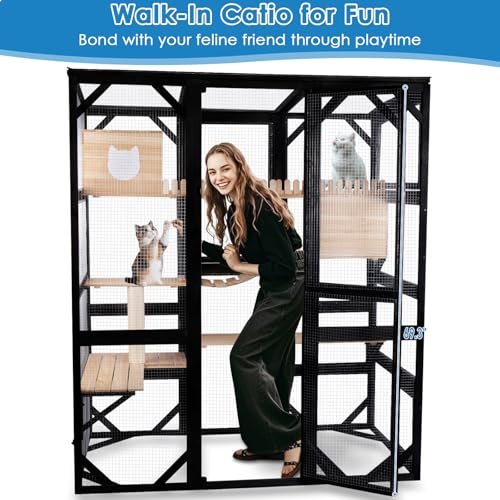
FunXplore's catio line runs from window-box perches for renters to full walk-in structures up to 71.1 inches long with 30.05 square feet of interior space โ enough for 8 cats across four tiered platforms, a sisal scratching post, dual hideaways, and an aerial crossing bridge. The two flagship walk-in models feature asphalt shingle roofing (one with a flip-friendly panel that can face either direction depending on rain angle), and both have enough door options โ 5 on the PD-1027, 6 on the PD-1029 โ to connect to a window, a pet flap, or a tunnel without removing the whole back panel. The wheeled 4-tier tower fits spaces where a fixed structure isn't practical, rolling in and out on four locking casters.
FunXplore's walk-in catios give you three distinct connection options: window mount via back-panel removal, pet flap alignment through a ground-floor door, and freestanding placement anywhere in the yard. Which method you choose determines where you place the catio, how you orient the asphalt roof, and which model's door count actually matters for your setup.
The PD-1029 is designed so the back panel removes entirely, letting the open frame align flush with a double-hung window. Your cat pushes through the window, steps into the catio, and can access all 4 tiers and 30.05 ftยฒ of interior space without ever touching the ground. Measure your window rough opening before ordering โ the catio's back opening needs to clear your window frame on both sides. Most standard double-hung windows work; bay windows and casements need a custom adapter tunnel between the sill and the catio frame.
The 6 ground-floor side doors on the PD-1029 are specifically designed for this scenario. Four of them give senior cats or kittens low-entry access at ground level while the main window connection handles your other cats. This is also useful if you ever want to connect a cat tunnel from the catio to a second enclosure.
If your cat door is in a wall or door panel rather than a window, align one of the PD-1029's 6 side doors with the flap opening. The ground-floor doors are sized for this โ a cat flap tunnel bridging the gap between the structure and your exterior wall is all you need. For the PD-1027 (5-door version at 62.6"L), the 5-door configuration gives you enough placement flexibility to line up one access point regardless of where your pet flap exits.
Not every setup needs a house connection. Freestanding catio placement works well for feral cat caretakers, multi-cat households wanting a designated outdoor enclosure, and anyone whose home layout makes window mounting impractical. For freestanding use, surface type matters more than you'd expect.
Both the PD-1029 and PD-1010 feature what FunXplore calls a flip-friendly asphalt roof โ the panel can be installed facing front or back depending on the direction your primary rain comes from. This matters more than it sounds. Most backyards have a prevailing rain angle based on wind direction. Orienting the roof panel so the lower edge faces into the rain means water sheds away from the front door rather than dripping directly over the entry point. Before final assembly, stand at the planned install location during or just after rain and note which direction water runs. Set the roof overhang toward that side.
Both walk-in models have full-height front doors โ 67" on the PD-1029, 69.3" on the PD-1027. Most adults can step in without stooping. The practical difference: the PD-1027's slightly taller door matters if you're over 6'1" and plan to do regular cleaning inside the structure. For the PD-1010 wheeled tower at 70.9"H, you won't step inside โ you access the interior through the 2 lockable doors, and the removable middle floor slides out for cleaning without disassembly. Plan for roughly 10โ15 minutes of cleaning time per week for a 4โ6 cat household using a walk-in catio.
The PD-1010 at 31.5ร31.5" has 4 wheels โ 2 of them brake casters โ which makes it the only FunXplore catio you can genuinely move in and out of the house by yourself. This is the right choice if you want to bring the catio inside during severe weather or if your outdoor space changes seasonally. The removable middle floor gives you two modes: keep it in for a 2โ6 cat configuration with distinct levels, remove it for open floor-to-ceiling climbing space. The window-facing sliding door connects to an indoor window or cat flap the same way as the larger walk-in models.
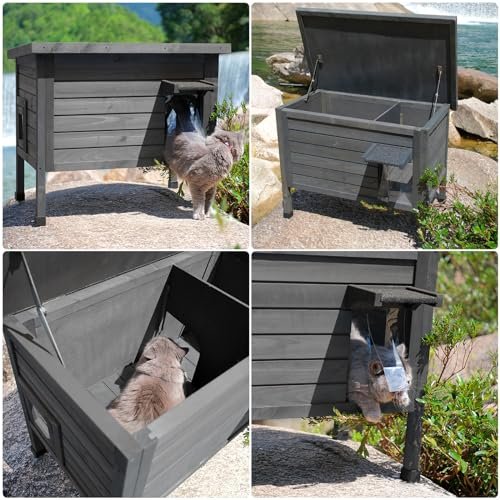
FunXplore's outdoor cat house line spans single-cat insulated shelters built for feral colonies to a 4-tier tower covering 19.99 square feet for up to 6 cats. The two insulated models โ PD-1002 at 34.5ร21.7 inches and the compact PD-1001WA โ use the same layered wall construction: 0.47-inch fir wood outside, 0.6-inch styrofoam sealed in the middle, and 0.12-inch plywood on the interior face. That foam is permanently bonded, not a removable liner, and it runs through all six panels including the floor and ceiling. Every shelter in the line sits on an elevated base that keeps the floor off damp ground, and all models include at least two exits โ a design specifically for feral cats who need an escape route if another animal approaches from the front.
Getting an insulated cat shelter through a genuine winter โ temperatures regularly in the 20sยฐF, wet ground, wind โ requires more than buying the right box. Placement, bedding, exit orientation, and heating pad decisions all affect whether a feral cat actually uses the shelter and stays warm inside it. Here's what actually works, based on what verified buyers report and what FunXplore's construction specs make possible.
The single biggest warmth factor is wind exposure. A shelter sitting broadside to a prevailing northwest wind loses heat through the walls regardless of insulation rating. Position the shelter so its back faces the dominant wind direction โ not a door opening. For the PD-1002 (34.5"D ร 21.7"W), the two escape doors are on opposite sides; one should face away from the wind and serve as the cat's primary entry, while the other faces a less exposed direction as the emergency exit route.
Elevate if you can. The PD-1002 and PD-1001WA both have elevated feet, which lifts the floor panel off wet or frozen ground. That matters: even 0.47-inch fir wood conducts cold from a frozen concrete surface. On a wooden deck or porch โ which many feral cat caretakers use โ the shelter sits well clear of the worst of it. On bare ground in a yard, adding a thin piece of rubber mat or scrap lumber under the feet adds another buffer.
If you're placing the shelter against a building wall, go for the south-facing side if possible. A shelter backed against a north-facing wall in a shaded area gets significantly less solar warming during the day, which makes the foam insulation work harder at night.
Straw โ not hay, not blankets. This is something the feral cat community is consistent about. Straw is hollow-stemmed and traps air for insulation without absorbing moisture the way blankets and fleece do. A wet blanket inside an insulated shelter is colder than no bedding at all. Fill the floor of the PD-1002 (4.1 ftยฒ interior) about 3โ4 inches deep with loose straw, and a cat will burrow into it and create a body-heat pocket that the 6-side foam walls hold remarkably well.
One buyer in Minnesota reported their porch cat's shelter maintaining noticeably warmer interior temps than outdoor air even when temps dropped into the single digits. That's plausible: the 0.6-inch styrofoam sandwiched inside the 0.47-inch fir panels creates a sealed thermal envelope on all 6 sides โ including the floor and ceiling โ which prevents the convective heat loss that single-wall shelters can't stop.
Both the PD-1002 and PD-1001WA have 2 access doors. For feral cats, this isn't about convenience โ it's about whether the cat feels safe enough to use the shelter at all. Cats with only one exit are vulnerable inside a box. A feral cat that senses something approaching from the front door has no way out.
Orient the primary entry door away from the most common approach path in your yard โ typically away from where you or neighbors walk, or where other animals approach. In urban and suburban settings with raccoons active at night, position the secondary exit so a cat can bolt in the opposite direction from the entry point. The PVC door strips on the PD-1001 model's entry can be a barrier for very shy ferals at first โ some caretakers tie them back or remove them temporarily while the cat gets comfortable, then reattach them once the cat accepts the shelter.
Several verified buyers have drilled small holes in the corner or base of FunXplore shelters to run a heating pad cord through, then siliconed around the hole to seal it. This works, and buyers report success with it. A few things to know before doing it:
Check straw monthly during winter. Wet straw compacts and loses its insulating properties โ if it smells musty or feels matted, replace it. The hinged roof on both insulated models lifts fully open for top-down access, making a bedding swap a 5-minute task. The asphalt shingle roof on these models sheds rain without additional treatment, but if the shelter sits in direct sun for long periods, an annual coat of exterior wood sealant on the outer panels extends the life of the fir significantly โ particularly on south-facing surfaces.
FunXplore builds six distinct product lines โ outdoor cat houses, walk-in catios, dog kennels, rabbit hutches, chicken and duck coops, and kids' sandboxes โ all from fir wood with the same weather-resistance philosophy. Most buyers land here knowing they need something for their backyard. The question is which line actually fits their situation.
Choose an outdoor cat house or shelter if you're managing feral or community cats who need a protected sleeping spot but don't need human-accessible space. These are compact, ground-level structures โ the insulated PD-1002 at 34.5ร21.7ร27.2" is the right call for TNR caretakers in cold climates, where 0.47-inch fir walls with 0.6-inch foam insulation between them makes a measurable difference on a January night. The 4-tier PD-1024 tower at 19.99 ftยฒ works for multi-cat colonies or indoor cats who need outdoor enrichment without walk-in setup complexity.
Choose a walk-in catio if your indoor cats need daily outdoor access and you want to be able to step inside yourself โ for cleaning, feeding, or just spending time with them. The PD-1029 at 71.1"L with a 67" front door and 30.05 ftยฒ of interior space fits up to 8 cats and can connect directly to a window or pet flap by removing the back panel. This is the right line if you're comparing against Aivituvin and want a specific feature breakdown before deciding.
Choose a dog kennel based on two decisions: size and whether you need insulation. FunXplore's line runs from the PD-1007 at 34.3"L for dogs under 30 lbs up to the PD-1019 at 59.1"L for Great Danes and Mastiffs. Every model in the line uses an iron chew-proof frame โ that's the design decision that sets it apart from wood-only competitors. If your dog lives outside year-round in a cold climate, the insulated models (PD-1009 and PD-1019) with 6-side foam construction are the better pick. If you're in a mild climate and the dog sleeps inside most of the time, the non-insulated iron-frame models work fine.
Choose a rabbit hutch or small animal cage if you're housing rabbits, guinea pigs, tortoises, ferrets, or chinchillas and need an outdoor shelter or supervised enclosure. The 0.43-inch wire floor spacing is the spec that matters most here โ it's tight enough to prevent rabbit feet from slipping through and causing sore hocks, which is the primary structural complaint in the r/Rabbits community about commercial hutches. One honest note: no FunXplore hutch replaces daily exercise space. They're sleeping shelters and supervised enclosures, not full-time primary housing.
Choose a chicken or duck coop if you're keeping backyard poultry and want something meaningfully more substantial than thin-walled flatpack competitors. The 1.38-inch solid wood panels are the headline difference โ most category competitors use panels closer to 0.75 inches. The PD-1032W-R (chicken, insulated) and PD-1031W-Y (duck, insulated) are the right picks for year-round outdoor use; the non-insulated versions work for covered or mild-climate setups.
Choose a sandbox if you have kids between 3 and 10 and want a wooden structure that'll hold up through multiple seasons. All four FunXplore sandbox models are CPSIA and ASTM F963-23 certified. The choice within the line is mostly about scale: the PD-1023B at 47ร47" works for 2โ4 kids, the octagonal PD-1020 at 84.5ร77" handles 4โ8 kids and holds 800โ1,000 lbs of sand. If your kids also want a place to eat lunch outside, the PD-1021 picnic table combo is the only model that solves both problems at once.
Many FunXplore buyers end up with structures from more than one line โ a catio for indoor cats plus a sandbox for kids is a genuinely common combination. The shared build standard (same fir wood, same asphalt shingle roofing approach, same iron-frame philosophy on the kennel line) means everything looks like it belongs in the same backyard, because it does.
FunXplore's walk-in catios and Aivituvin's catios occupy the same price range and serve the same buyer. The r/Catio subreddit has an active comparison thread on exactly this question. Here's what the product specs actually show โ no fabricated Aivituvin claims, just the documented differences in FunXplore's design choices that buyers cite when they choose one over the other.
This is the clearest structural difference. The PD-1029 uses an asphalt shingle roof โ the same basic material as residential roofing, just scaled down. It's rigid, sheds rain without pooling, and won't tear or collapse under snow load. Many competing catios at this price point use a PVC tarp cover stretched over a frame. Tarp covers can sag under accumulated water, can be punctured, and tend to tear at the attachment points after a few seasons of UV exposure. The PD-1027 uses a PVC tarp roof โ so even within FunXplore's own line, the PD-1029's asphalt shingle is the more durable roof choice for buyers in rainy or snowy climates.
The PD-1029 has 6 access doors. 4 of those ground-floor side doors are specifically sized for cat tunnel connections or low-threshold access for senior cats. The PD-1027 has 5 doors. More doors means more flexibility in how you configure the house connection and how many tunnel extensions you can add later. Buyers who already have a tunnel system or plan to expand their enclosure should count doors carefully before ordering any catio.
The PD-1029's front door is 67" โ just under 5'7". The PD-1027 front door reaches 69.3". Most adult buyers can enter either model without crouching. For buyers over 6' who clean the enclosure regularly, the extra 2.3 inches on the PD-1027 makes a real difference in daily use. The PD-1010 wheeled tower at 70.9" total height is not a walk-in model โ you access it from outside through doors, not by stepping in.
| Model | Dimensions | Interior Space | Suggested Capacity |
|---|---|---|---|
| PD-1027 | 62.6"L ร 32.9"W ร 73"H | 26.1 ftยฒ | Up to 6 cats |
| PD-1029 | 71.1"L ร 34.7"W ร 72.9"H | 30.05 ftยฒ | Up to 8 cats |
| PD-1010 | 31.5"L ร 31.5"W ร 70.9"H | 16.8 ftยฒ | Up to 6 cats |
The 30.05 ftยฒ in the PD-1029 is meaningful for multi-cat households. A 2-cat household can comfortably use the PD-1027. A 5โ6 cat household should look at the PD-1029 โ cats don't share vertical space peacefully below a certain square footage per cat, and the 4 tiers distribute that space more effectively than floor area alone suggests.
Both FunXplore walk-in catio models use fir wood with reinforced wooden corner bars at every junction. The product listing notes these bars as the structural element that prevents racking in wind โ an important detail for buyers in exposed backyard locations without fence windbreaks. Reddit reviewers on the r/Catio thread note that assembly quality is the primary variable in whether a walk-in catio feels solid or flimsy after construction: fully tightened corner connections make the difference between a structure that rocks in a gust and one that doesn't.
The PD-1029 is the right pick for buyers who want the largest FunXplore walk-in (30.05 ftยฒ, 8-cat capacity), a rigid asphalt shingle roof, and the most connection options (6 doors). The PD-1027 works for buyers who need slightly more front-door clearance (69.3") and are willing to trade the tarp roof for the taller entry โ or for buyers where a PVC tarp roof is acceptable because the catio is placed under a covered patio. Neither model is the right choice for someone who wants a fully pre-assembled unit โ plan for a half-day build with a second person.
We pulled this roundup because it puts five of the most-searched catio options head to head โ including two Aivituvin models that come up constantly when buyers compare us on Reddit. You'll see how each structure looks assembled, not just in the product photo. Watch it before you decide, then come back and check our specs side by side.
"I manage a colony of about 14 ferals in a suburb outside Chicago, and I've burned through a lot of cheap plastic igloos over the years. The PD-1002 Insulated Feral Shelter Large is the first shelter I've put out where I can actually feel the heat difference when I reach in โ the foam runs through all six panels, including the floor, and the fir wood exterior doesn't flex in wind the way those thin boxes do. My one note: the PVC door flaps took two cats a while to get used to. Once they did, they never left."โ Diane K., TNR volunteer managing a 14-cat colony, on Outdoor Cat House & Shelter
"I spent probably three weeks comparing the PD-1029 Walk-In Catio 8-Cat against Aivituvin before ordering. The 67-inch front door height was the deciding factor for me โ I'm 5'10" and I wanted to walk in without stooping to clean litter. The flip-friendly asphalt roof is genuinely useful: I reversed it to face the back after a storm changed my drainage angle. Assembly took two people and about four and a half hours. That's real, not 'easy.' The finished structure is rock solid."โ Matt R., indoor cat owner adding outdoor access for 4 cats, on Cat Catio & Enclosure
"Our 85-pound German Shepherd mix destroyed the door frame on two cheaper houses before we tried the PD-1009 Large Insulated Dog House. The iron frame around the entrance is the difference โ he's gnawed at it and there's no visible damage after four months. The interior stays noticeably warmer than outside on cold nights; I'd estimate around 8 to 10 degrees based on my own check with a thermometer. The only thing I'd flag: the roof opening is useful for cleaning but make sure every bolt is seated fully or it rattles in wind."โ Josh T., owner of an 85-lb German Shepherd mix, on Dog House & Kennel
"I went in knowing about the r/Rabbits community's position on hutches for full-time housing, so I set this up as a nighttime shelter paired with a large exercise pen during the day. The 0.43-inch wire floor spacing on the PD-1011A 2-Tier Hutch Double Tray is the spec that mattered most to me โ my Holland Lop's feet sit flat on it without slipping through. The dual pull-out trays make the morning clean genuinely fast. Not chew-proof at the wood corners, so I keep an eye on those."โ Priya M., rabbit owner using hutch as supervised outdoor shelter, on Rabbit Hutch & Small Animal Cage
"We got the PD-1032W-R Insulated Chicken Coop Red for two Buff Orpingtons and the 1.38-inch wood panels are noticeably thicker than the coop we replaced. I can feel the weight difference just lifting a panel. The ventilation windows close tightly enough that condensation isn't building up inside, which was my main issue with the old coop. It's early days โ only a few weeks in โ but the birds settled in fast and we haven't had any predator attempts at the mesh windows yet."โ Carl B., backyard poultry keeper with 2 Buff Orpingtons, on Chicken Coop & Duck Coop
"The PD-1021 Sandbox Picnic Table Combo took my husband and me about two and a half hours to build โ the instructions could be clearer on the canopy attachment, but once we figured out the sequence it went together solidly. The kids are 4 and 6, and they switch between the sandbox and sitting at the table for snacks without any help. The fir wood has a smooth finish; no splinters after three months of daily use and one full rainstorm. The canopy adjustment range from 37.8 to 50.8 inches actually matters when the sun moves."โ Sarah L., parent of two kids ages 4 and 6, on Kids Sandbox
FunXplore builds dual exit doors into all of its feral cat shelter models, including the PD-1002 and PD-1001WA. A second exit gives a cat a bolt route if a predator blocks the main entrance โ particularly relevant for feral colony cats who can't retreat indoors. Even single-cat shelter models include this feature as standard.
The 3-3-3 rule describes a common TNR acclimation timeline: 3 days for a feral cat to decompress, 3 weeks to learn your routine, 3 months to feel safe. For shelter setup, this means placing the FunXplore insulated cat house in a stable, low-traffic spot for at least the first 3 days โ repositioning during acclimation can reset the timeline.
Yes โ a walk-in catio gives indoor cats controlled outdoor enrichment without the risks of free roaming: no traffic, no predator encounters, no getting lost. The FunXplore PD-1029 Walk-In Catio 8-Cat provides 30.05 ftยฒ of space across 4 tiered platforms and a climbing bridge, which satisfies the climbing and perching behavior most indoor cats don't get enough of.
A catio alone isn't suitable as a cat's only living space โ it lacks climate control and the social access cats need. FunXplore's walk-in catios are designed as connected enrichment spaces, not standalone housing. The PD-1029's back-panel removal and 6 access doors allow continuous connection to your home so cats choose when to be outside.
Yes. Every FunXplore outdoor cat house, including the PD-1001 and PD-1002, uses an elevated floor design โ either raised plastic feet or a framed elevated base โ to prevent ground moisture from wicking up into the bedding. On wet ground or grass, even a small elevation gap makes a meaningful difference in how dry the interior stays through winter.
A hutch is typically built from heavier materials designed to withstand outdoor weather and predator pressure; a cage is a lighter indoor enclosure. FunXplore hutches like the PD-1011A 2-Tier Hutch Double Tray use fir wood construction, an asphalt or UV-resistant roof, and 0.43-inch wire floor spacing โ built for outdoor use, not just indoor containment.
No โ rabbits need daily exercise outside their hutch to avoid skeletal problems and behavioral issues. FunXplore hutches are designed as sleeping shelters and supervised outdoor enclosures, not full-time primary housing. The r/Rabbits community recommends pairing any hutch with a minimum of several hours of free-roam or exercise-pen time each day.
Most veterinarians recommend bringing dogs inside when temperatures drop below 20ยฐF, though the threshold varies by breed, coat type, and body weight. FunXplore's insulated dog houses โ the PD-1009 and PD-1019 โ use 0.6-inch foam sandwiched between double wood layers on all 6 sides. One verified buyer reported a consistent 10-degree temperature difference between the interior and outside air.
Straw is the best insulating bedding for outdoor dog houses in cold weather โ it traps air and doesn't absorb moisture the way blankets do. For the FunXplore PD-1019 XXL Insulated Dog Kennel, a layer of straw on the removable floor works well paired with the built-in foam insulation. Cedar shavings are a reasonable warm-weather alternative that helps with odor.
Sandboxes can accumulate biological and chemical hazards over time โ from animal waste, insects, and natural debris โ which is why the cover matters as much as the sandbox itself. FunXplore sandboxes certified to CPSIA and ASTM F963-23 standards include non-woven sand screens and covers. Using washed play sand (not beach sand) and replacing it annually significantly reduces contamination risk.
Washed play sand โ sold at hardware stores and garden centers โ is the standard recommendation for kids' sandboxes. It's been screened, washed, and graded to remove debris and reduce silica dust. Avoid beach sand (salt, organic matter), construction sand (coarser particles, potential chemical contamination), and kinetic sand for outdoor use in open sandboxes. The FunXplore PD-1020 Octagonal Family Sandbox holds 800โ1,000 lbs of sand.
FunXplore sells separate duck coop and chicken coop variants with different internal configurations. The PD-1031-Y Duck Coop Standard and PD-1031W-Y Insulated Duck Coop are specifically designed without high roosting bars, which ducks can't reach, and with better moisture management for water-loving birds. The chicken coops (PD-1032-R and PD-1032W-R) include 2 nesting boxes and 2 roosting bars suited to chickens.
FunXplore started where most backyard pet brands don't: with an honest look at what outdoor wooden structures actually fail at. Warped plywood that lets cold air in through gaps. Wire spacing wide enough to catch a rabbit's foot. Dog houses that flood from the bottom up because the floor sits flush with the ground. Roofs that peel off in the first real windstorm. The brand's answer to those failures wasn't a marketing claim โ it was a set of specific engineering decisions that now run through every product in the line: asphalt shingle roofing, foam insulation sealed permanently within double wood layers, iron chew-proof frames, and elevated floors on every outdoor shelter.
The FunXplore catalog today covers six distinct product lines, all built around the same fir-wood construction standard. The outdoor cat house and shelter line spans compact insulated feral shelters โ like the 6-side foam PD-1002 with its 0.47-inch fir and 0.6-inch foam sandwich โ up through 4-tier weatherproof cat towers. The cat catio and enclosure line includes walk-in catios large enough for 8 cats and window box perches that attach directly to a double-hung frame. Dog house and kennel models run from small-dog shelters to XXL kennels rated for 280 lbs, with three models offering the same 6-side foam insulation as the cat shelter line. Rabbit hutch and small animal cage options cover everything from a basic single-tier hutch to a 5-level ferret and chinchilla cage with a stainless steel tray and built-in cooling aluminum panel โ and a specialty tortoise habitat with an adjustable lamp stand and hygrothermograph. The chicken coop and duck coop line takes the same 1.38-inch solid wood panel and asphalt roof standard into backyard poultry, with separate configurations for chickens (nesting boxes, high roosting bars) and ducks (lower entry, moisture management). And the kids sandbox line brings cedar and fir construction, CPSIA and ASTM F963-23 certification, and the same weatherproofing logic to backyard play โ octagonal family sandboxes, 2-in-1 picnic table combos, canopy models for sun protection.
What holds all six lines together isn't a lifestyle pitch โ it's a shared position on what outdoor wooden structures should actually do. They should stay weatherproof without annual rebuilds. They should protect animals from real threats: ground moisture, temperature swings, predators, and their own chewing habits. And they should be honest about what they are and aren't. A hutch is a sleeping shelter, not a full-time home. A catio connects to your house; it doesn't replace it. FunXplore builds products for buyers who've already done the research and know the difference โ and wants to give them something that holds up when theory meets a Texas thunderstorm or a Minnesota January.
Real answers to the questions pet owners and parents actually ask before they buy.
FunXplore sells all six product lines โ outdoor cat houses, catios, dog kennels, rabbit hutches, chicken and duck coops, and kids sandboxes โ through the FunXplore Store on Amazon.com. The store page is the most complete way to browse the full catalog, compare models side by side, and check current availability and pricing for each product.
Order support, returns, and warranty claims for FunXplore products are handled through Amazon Customer Service. Most FunXplore products carry a 6-month manufacturer warranty โ the PD-1020 Octagonal Family Sandbox carries a 1-year manufacturer warranty. To start a return or warranty claim, go to your Amazon orders page and select the relevant FunXplore item.
The Amazon Q&A section on each product listing is the fastest way to get answers to specific questions about assembly, dimensions, or compatibility before ordering. FunXplore and verified buyers both respond to questions there. For broad catalog questions โ which hutch fits which animal, which catio connects to which window size โ the FunXplore Store page also lists the full product comparison tables.