FunXplore Dog Houses Built for Real Weather
This line covers six outdoor dog houses and kennels — from a compact 20-inch shelter for small dogs and cats to a 59-inch XXL kennel engineered for extra-large breeds. Every model is built around weather resistance and chew-resistant framing, because a dog house that warps in its first winter or splinters under a determined chewer isn't doing its job.

All Models in the Dog House Line
PD-1019 XXL Insulated Dog Kennel
See on Amazon
PD-1009 Large Insulated Dog House
See on Amazon
PD-1018 XXL Dog House Iron Frame
See on Amazon
PD-1007 Small Chew-Proof Dog House
See on Amazon
PD-1008 Medium Chew-Proof Dog House
See on Amazon
PD-1001DOG Small Dog House Asphalt
See on AmazonModel Comparison at a Glance
The six models in this line split across three size categories and two construction tiers — insulated and non-insulated. Use this table to compare the specs that matter for your dog's size and your climate.
| Model | Dimensions (L×W×H, inches) | Insulation | Key Frame Feature | Rating | Best For |
|---|---|---|---|---|---|
| PD-1019 (ASIN B0DLHLF6LT) | 59.1 × 34.8 × 34.8 | 6-side all-around foam | Chew-proof iron frame, openable roof | 4.1 / 5 (142 reviews) | Extra-large dogs in cold climates; year-round outdoor use |
| PD-1018 (ASIN B0DK8CTQGD) | 59.1 × 35 × 35 | Not specified | Chew-proof iron frame, window | 4.4 / 5 (55 reviews) | Extra-large dogs in mild climates or covered areas; ventilation priority |
| PD-1009 (ASIN B0CKRWJ39X) | 43.3 × 26.4 × 29.6 | 6-side all-around foam | Strong metal chew-proof frame | 4.1 / 5 (142 reviews) | Medium to large dogs in cold climates |
| PD-1008 (ASIN B0DGGG4TT7) | 43.3 × 26.4 × 29.6 | Not specified | Strong metal chew-proof frame, raised design | 4.4 / 5 (55 reviews) | Medium to large dogs in mild climates; elevated moisture protection |
| PD-1070 (ASIN B0F6YPVLW7) | 34.3-inch length (full dims not provided) | Not specified | Strong metal chew-proof frame, raised design | 4.4 / 5 (55 reviews) | Small to medium dogs; moderate climate outdoor or covered patio use |
| PD-1001DOG (ASIN B0FFMZVGT6) | 20.25 × 23.6 × 20.88 | Not specified | Openable asphalt roof, raised floor | 5.0 / 5 (1 review) | Small dogs, cats, and small animals; compact shelter for covered porch or colony feeding station |
If your dog is right on the border between two size categories, go up — a dog house that's slightly larger than needed is always better than one the dog can't fully stretch out in. And if your winters drop consistently below freezing, choose the 6-side insulated version of whichever size fits your dog.
How to Choose the Right Size and Build
The most important starting point is floor length, not the product name. A dog needs enough room to stand up, turn around, and lie fully stretched — and for most large breeds, that means the interior floor length should be at least 1.25 times the dog's body length from nose to tail base. The two 59.1-inch models (PD-1019 and PD-1018) are built for extra-large breeds and measure 34.8–35 inches wide, giving a dog like a German Shepherd or Labrador genuine room to change positions. The 43.3-inch models (PD-1009 and PD-1008) work well for medium to large dogs — think Border Collie, Bulldog, or mid-size mixed breed. The 34.3-inch PD-1070 fits small to medium dogs, and the 20.25-inch PD-1001DOG is designed for small dogs, cats, and other small animals.
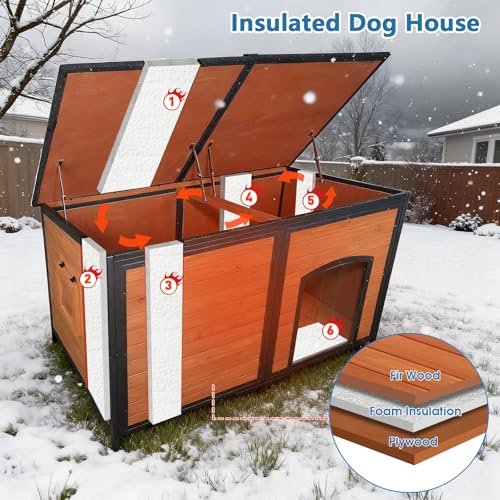
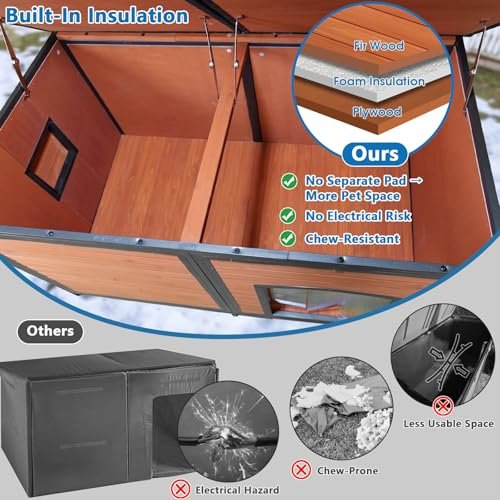
The second decision is insulation versus non-insulated. Three models in this line — the two 59.1-inch kennels and the 43.3-inch PD-1009 — specify all-around 6-side foam insulation built into every panel, including the floor and ceiling. That construction matters most if the house will be exposed year-round in climates that see temperatures drop below freezing, or for dogs that spend extended time outdoors in winter. The non-insulated models (PD-1008, PD-1070, and PD-1001DOG) are still weatherproof through their raised floor, asphalt or sealed roof, and chew-resistant framing — but they're better suited for moderate climates or covered patio use in colder regions.
- Extra-large breeds in cold climates: PD-1019 (59.1-inch, 6-side insulated, openable roof)
- Extra-large breeds in mild climates or covered areas: PD-1018 (59.1-inch, chew-proof iron frame, window)
- Medium to large dogs in cold climates: PD-1009 (43.3-inch, 6-side insulated)
- Medium to large dogs in mild climates: PD-1008 (43.3-inch, chew-proof frame, raised design)
- Small to medium dogs: PD-1070 (34.3-inch, chew-proof frame, raised design)
- Small dogs, cats, or small animals: PD-1001DOG (20.25-inch, asphalt roof, raised floor)
One more consideration: if you have a dog that actively chews wood — especially around door frames and entry edges — prioritize any model explicitly built with a strong metal chew-proof frame. All models in this line include that feature to some degree, but the insulated models layer that frame around a more thermally complex construction, so check that the specific entry points and window frames are reinforced before deciding.
Placement, Setup, and Real-World Use Scenarios
Every model in this line uses a raised floor design, which solves a problem that flat-bottomed dog houses don't address: ground moisture. Even on a dry day, a house sitting flush on soil or grass wicks up cold and damp from below — and that exposure is exactly what the elevated floor eliminates. Place any model directly on level ground, a patio slab, or compacted gravel. Avoid soft, uneven soil where the feet can sink unevenly, which shifts the frame over time and creates gaps at panel joints.
For the two 59.1-inch kennels, plan on two people for assembly. The large panels and heavy iron frame components need to be held in position while screws are seated — one person can technically do it, but alignment suffers and the extra time isn't worth it. The openable roof on PD-1019 is one of the most practical features in the line for daily use: lift it fully open for bedding swaps, cleaning, or checking on a dog that's reluctant to come out. The window on PD-1018 serves a different purpose — ventilation and light in warmer months, which matters for dogs that use the house in summer as well as winter.
The PD-1001DOG small shelter occupies a different use category. At 20.25 × 23.6 × 20.88 inches, it's sized for cats, small dogs, and small animals — making it a practical option for a TNR colony feeding station shelter, a secondary shelter for a small yard dog, or a warm resting spot placed on a covered porch. The asphalt roof and raised floor give it genuine weatherproofing despite its compact footprint. If you're placing it in an exposed yard rather than a covered patio, orient the opening away from the prevailing wind direction.
Maintenance, Longevity, and Cold-Weather Care
Every model in this line is a wooden outdoor structure, which means annual maintenance is part of the deal — not a sign of a flawed product, just the physics of wood living outside. Before the first winter, apply a coat of exterior wood sealant or weatherproofing oil to all exposed side panels, paying extra attention to the bottom edges and any panel joints where water can travel horizontally. The asphalt roofing on models like the PD-1001DOG handles rain without additional treatment, but the wood walls below it benefit from a seasonal coat. For the larger insulated kennels, the roof panels are the most protected element — it's the lower wall edges and floor perimeter that need the most attention.
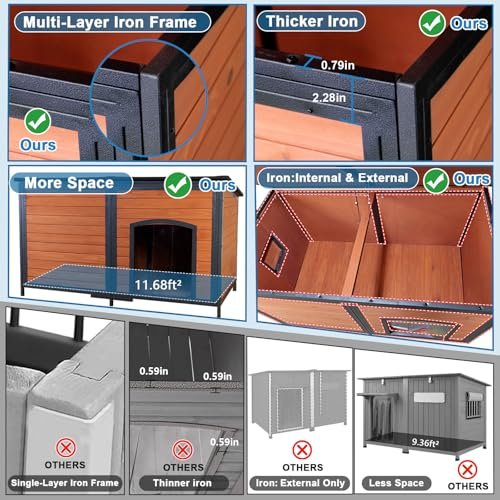
The chew-proof iron frame is the structural element that holds up over time regardless of what a dog does to the entry edges. Raw wood door frames on competing products can be gnawed through in weeks by a determined chewer; the metal framing in FunXplore's line adds meaningful resistance. That said, no structure is fully chew-proof for every dog — a dog that's bored, anxious, or under-exercised will find a way to work on anything. If your dog actively chews, add enrichment inside the kennel (a durable chew toy, a worn item of clothing for scent comfort) and inspect the frame edges monthly for any wood exposure that may have developed.
- Annual: Coat all exposed wood panels — especially lower edges and panel joints — with exterior wood sealant before winter.
- Monthly in winter: Check that all screws remain fully tightened; temperature swings expand and contract wood, which can gradually loosen fasteners.
- After heavy rain: Check the raised floor contact points for soil erosion that could cause unlevel settling. Re-level if any foot has sunk unevenly.
- After winter: Inspect the roof panel edges and the floor panel underside for any moisture damage, and re-seal any areas where the finish has worn through.
- For insulated models: The foam layers are enclosed between wood panels and not exposed to water — no special maintenance needed for the insulation itself.
For dogs that spend cold nights outdoors in the insulated kennels, add a layer of straw (not hay — straw traps air; hay traps moisture) inside the shelter. The 6-side foam insulation handles the structural heat retention; the straw layer gives the dog a warm contact surface that it can burrow into. Owners in cold climates who've combined this setup with the insulated models report noticeably warmer interior temperatures compared to single-wall alternatives — but for extreme cold below 15°F for extended periods, any outdoor shelter should be supplemented with a heated dog pad for small or short-coated breeds.
Frequently Asked Questions
What does "6-side insulated" actually mean, and why does it matter?
It means foam insulation is built into all six interior panels — the four walls, the floor, and the ceiling — not just the walls or the roof. Most competing dog houses insulate only one or two sides, which still leaves a significant heat-loss path through the floor when the ground is cold. In models PD-1019 and PD-1009, the foam is sandwiched between double wood layers on every surface, so the enclosed air inside the kennel stays substantially warmer than outside air temperature. This is the construction detail that matters most for dogs in climates with hard winters, and it's worth confirming on any dog house you compare before buying.
My dog chews everything — will the chew-proof iron frame actually hold up?
The metal frame reinforces the entry edges and structural frame points that dogs are most likely to gnaw — and it performs significantly better than raw wood edges, which a determined chewer can work through in days. That said, no outdoor kennel is completely indestructible for every dog. If your dog is an aggressive chewer, inspect the frame edges monthly for any areas where the metal may have shifted to expose underlying wood, and add a durable chew toy inside the kennel to redirect the behavior. The iron frame is a genuine improvement over unprotected wood frames, but it works best as part of a complete setup — not as a substitute for enrichment and exercise.
Can I use the small PD-1001DOG shelter for my cats as well as a small dog?
Yes — the PD-1001DOG is explicitly listed for small animals and cats as well as small dogs. At 20.25 × 23.6 × 20.88 inches with a raised floor and openable asphalt roof, it's sized appropriately for one or two adult cats or a single small dog. The asphalt roof handles rain exposure well, and the raised floor keeps moisture from wicking up from below. If you're placing it in an exposed outdoor location for a feral or community cat, orient the opening away from the direction the wind typically comes from — a simple adjustment that significantly improves interior warmth retention.
How long does assembly take, and do I need a second person?
For the two 59.1-inch models (PD-1019 and PD-1018), plan on two people and 2–3 hours. The large panels and iron frame components need to be held in alignment while screws are seated — one person can technically manage it, but the panel alignment is much harder to maintain solo and a misaligned roof panel creates a future drip point. The medium 43.3-inch models and the small PD-1001DOG are manageable for one person with basic tools and typically take 1–2 hours. Take the extra time to fully tighten all corner fasteners before moving the kennel outdoors — that's what keeps the frame rigid in wind and prevents panel gaps from developing over time.
Do I need to treat or seal the wood before placing the kennel outside?
Yes, and doing it before the first rain is the right call. Apply a coat of exterior wood sealant or weatherproofing oil to all exposed wood panels — particularly the lower wall edges and panel joints — before the kennel goes outside. The asphalt roofing on applicable models handles rain without additional treatment, but the wood side panels and any exposed lower edges benefit from a seasonal coat. Models that will live in full sun also need UV-resistant treatment to prevent cracking and warping over time. Treating the wood once before the first season and then annually afterward adds multiple years of life to any outdoor wooden kennel. It's a 30-minute task that prevents most of the early-failure complaints buyers leave in reviews.
What's the difference between PD-1018 and PD-1019 — they look almost identical in size?
Both are 59.1-inch extra-large kennels, but they're built for different priorities. PD-1019 includes 6-side all-around foam insulation built into every panel, plus an openable roof for easy cleaning and bedding access — it's the cold-climate, year-round outdoor choice. PD-1018 skips the foam insulation layer and instead adds a window, which improves ventilation and light in warmer months. PD-1018 also carries a slightly higher rating (4.4 vs. 4.1) across a smaller review sample. If your winters are consistently cold and your dog sleeps in the kennel overnight, PD-1019 is the right call. If you're in a mild climate or placing the kennel in a covered area where summer ventilation matters more than winter insulation, PD-1018 is worth considering.